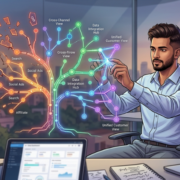
There’s a subtle shift happening in how brands are being built in India. It’s not loud, not flashy—but if you look closely, it’s everywhere. A skincare brand asking its users what product to launch next. A D2C startup building a Telegram group before even shipping its first order. Founders replying to DMs at midnight, not because they have to—but because they want to.
Somewhere along the way, marketing stopped being a one-way broadcast. It started becoming a conversation.
And that’s where community-led brands are quietly rewriting the rules.
What Does “Community-Led” Really Mean?
It’s easy to throw around the word “community,” but in this context, it means something specific. A community-led brand doesn’t just sell to people—it builds with them.
Customers aren’t just buyers. They’re contributors. Testers. Cheerleaders. Critics.
They help shape products, influence decisions, and often become the brand’s strongest advocates. Not because they’re paid to—but because they feel involved.
That sense of ownership changes everything.
Why This Model Feels So Natural Today
A big part of this shift comes from how people interact online now. Social media isn’t just for scrolling—it’s for participating. Commenting, sharing opinions, joining niche groups.
People want to be heard. And when a brand listens, it stands out.
Traditional ads still exist, of course. But there’s a growing fatigue around them. Banner blindness is real. So is skepticism.
On the other hand, a recommendation from someone within a community feels… different. More personal. More believable.
Trust Is the New Currency
If there’s one thing community-led brands understand well, it’s trust.
They don’t rely solely on polished campaigns or celebrity endorsements. Instead, they build credibility slowly—through consistent engagement, transparency, and genuine interaction.
It’s not always scalable in the traditional sense. It takes time. Effort. Patience.
But the payoff? Stronger loyalty. Higher retention. And a customer base that actually cares.
So, Are They Replacing Traditional Marketing?
This is where the big question comes in—Community-led brands India me traditional marketing ko kaise replace kar rahe hain?
The answer isn’t a clean “yes” or “no.”
They’re not replacing it entirely. At least, not yet.
What they’re doing is reshaping it.
Instead of spending heavily on ads upfront, many of these brands focus on building a core community first. Once that base is strong, marketing becomes more organic. Word-of-mouth does a lot of the heavy lifting.
Traditional marketing becomes a support system—not the foundation.
The Power of Early Adopters
One thing community-led brands do exceptionally well is involve early users.
These early adopters aren’t just customers—they’re insiders. They get sneak peeks, beta access, sometimes even direct conversations with the founders.
That kind of access creates a sense of belonging. And people who feel like they belong tend to stick around.
They also tend to talk. A lot.
And that’s where growth begins to feel less like marketing and more like momentum.
Challenges That Come With the Territory
Of course, this approach isn’t without its complications.
Managing a community takes effort. Real effort. You can’t fake it.
People expect responses. They expect transparency. And if something goes wrong, they expect accountability.
There’s also the risk of over-promising. When you involve your community in decision-making, you can’t always deliver on every suggestion. Balancing expectations becomes a delicate task.
And then there’s scale. What works with a few hundred people might not translate the same way with thousands.
Indian Consumers Are Especially Receptive
In India, this model feels particularly relevant.
There’s a strong sense of collectivism in many communities. People trust recommendations from peers, friends, and even online groups more than traditional ads.
Add to that the rise of regional content, niche interest groups, and vernacular platforms—and you have an environment where community-led brands can thrive.
It’s not just about selling a product. It’s about building a shared space.
The Role of Founders in This Shift
Another interesting aspect—founders are more visible than ever.
They’re not hidden behind corporate messaging. They’re on Twitter (or X), Instagram, LinkedIn—talking, sharing, sometimes even venting.
This visibility humanizes the brand. It makes interactions feel less transactional.
And in a community-driven model, that matters.
A Blend, Not a Battle
It’s tempting to frame this as a battle—community vs traditional marketing. But in reality, it’s more of a blend.
Many successful brands use both. They build strong communities and then amplify their message through ads when needed.
The difference is in the starting point.
Earlier, marketing came first. Community came later.
Now, for many brands, it’s the other way around.
A Final Thought
At its core, this shift is about something simple—connection.
People don’t just want to buy products anymore. They want to feel part of something. Even if it’s small. Even if it’s just a group chat or a comment section.
Community-led brands tap into that desire.
They don’t just ask, “How do we sell this?”
They ask, “How do we build this together?”
And maybe that’s why they feel different. Not necessarily bigger. Not always faster. But definitely… more human.
And in today’s market, that might just be their biggest advantage.