There’s a moment most of us remember—the teacher pauses, looks around the classroom, and asks, “Did that make sense?”
Sometimes it did. Sometimes it didn’t. And sometimes, you just nodded anyway.
Learning in India has always been a bit of a mixed bag—brilliant teachers in one corner, overcrowded classrooms in another, and a system that often struggles to keep up with individual pace. But now, something new has entered the room quietly. Not replacing teachers, but sitting beside them—AI tutors.
And honestly, it’s changing the conversation in ways we’re still trying to fully understand.
The Rise of AI Tutors: Convenience Meets Curiosity
AI tutors aren’t just chatbots anymore. They explain concepts, generate practice questions, adapt to your speed, and—maybe most importantly—never get tired of repeating things.
For a student stuck on a math problem at 11 PM, that’s powerful.
In India, where access to quality education can vary widely depending on location, AI tools offer something close to equal opportunity. A student in a small town can now access explanations that feel almost personalized.
But here’s the catch—learning isn’t just about information. It’s also about interaction, encouragement, and sometimes, that gentle push from a human who sees your potential even when you don’t.
Human Teachers: More Than Just Content Delivery
Good teachers do more than teach. They read the room. They notice when a student is unusually quiet. They understand hesitation, confusion, even boredom.
You can’t always code that.
There’s a certain warmth, a human instinct, that still sets traditional teaching apart. A teacher might change their explanation mid-sentence based on your expression. They might tell a story, crack a joke, or connect a concept to real life in a way that sticks.
And in a country like India—where cultural context, language diversity, and emotional nuances play a huge role—this human element matters more than we sometimes admit.
So, What’s Actually Happening to Learning Outcomes?
This is where things get interesting—and a bit complex.
If you look at raw metrics like test scores or concept clarity, AI tutors can definitely help improve performance. Students get more practice, immediate feedback, and the freedom to learn at their own pace.
But when you zoom out and ask—AI tutors vs human teachers India me learning outcome par kya impact daal rahe hain?—the answer isn’t straightforward.
Because “learning outcome” isn’t just marks. It’s confidence, critical thinking, communication skills, and even curiosity.
AI might help you solve a problem faster. A teacher might help you understand why it matters.
The Blended Learning Sweet Spot
If there’s one pattern emerging, it’s this—students seem to benefit most when both systems work together.
AI handles repetition, practice, and personalized pacing.
Teachers focus on deeper understanding, discussion, and emotional engagement.
It’s less of a competition and more of a collaboration.
Think of it like this: AI is the assistant who never sleeps, and the teacher is the guide who knows when to step in and when to step back.
Accessibility vs Depth: A Quiet Trade-Off
AI tutors are making education more accessible, no doubt. But there’s a subtle trade-off that often goes unnoticed.
When learning becomes too automated, there’s a risk of students becoming passive. Clicking through answers, relying on hints, and moving forward without fully grappling with the problem.
Struggle, uncomfortable as it is, is part of learning.
Human teachers, when effective, know how to let students sit with that discomfort just long enough to grow from it. AI, on the other hand, often prioritizes efficiency.
Neither approach is wrong—but they lead to slightly different learning experiences.
The Indian Classroom Is Evolving, Slowly
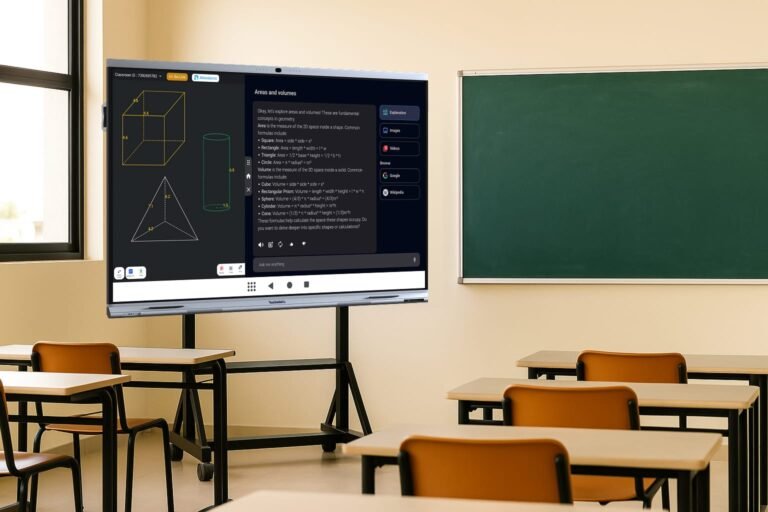
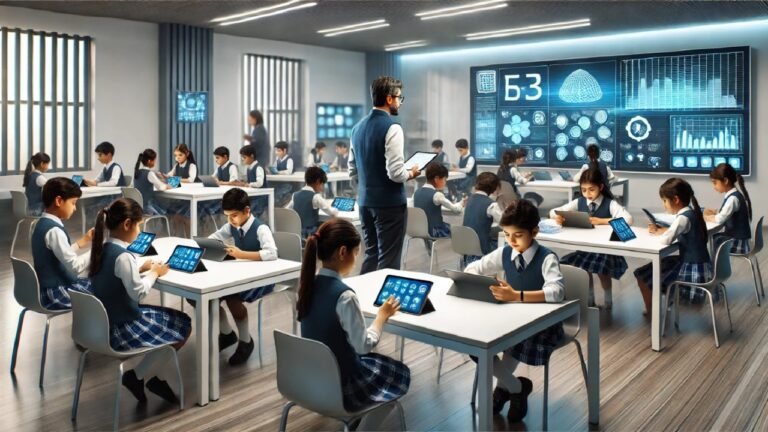
In metro cities, schools and coaching centers are already experimenting with hybrid models—smart classrooms, AI-powered assessments, and personalized learning dashboards.
In smaller towns, the shift is slower but visible. Mobile-based learning apps, affordable internet, and digital awareness are bridging gaps that once felt permanent.
But infrastructure, teacher training, and digital literacy still need work. Technology alone can’t fix systemic issues. It can only support them.
Students Are Changing Too
One thing that’s easy to miss—students today are different.
They’re more comfortable asking questions to a machine than raising their hand in class. There’s less fear of judgment, more willingness to explore.
At the same time, attention spans are shorter, and expectations are higher. Learning needs to be engaging, quick, and meaningful.
AI fits into that world naturally. Teachers, in many ways, are still adapting to it.
So, Who Wins?
Maybe that’s the wrong question.
It’s not about AI replacing teachers or teachers resisting AI. It’s about redefining roles.
AI can make learning more efficient.
Teachers can make it more meaningful.
And somewhere in between, students get the best of both worlds—if the balance is right.
A Thought to End With
If you think back to your own school days, chances are you don’t remember every lesson. But you probably remember a teacher who made something click.
That kind of impact is hard to replicate.
But maybe, just maybe, AI can help more students reach that moment—faster, more often, and with fewer barriers.
Not by replacing the human touch, but by making space for it where it matters most.